APTULLAH KURAN ARCHİVE
Who is Aptullah Kuran?
The famous architectural historian Aptullah Kuran was born in Izmir in 1927. Kuran entered Robert College in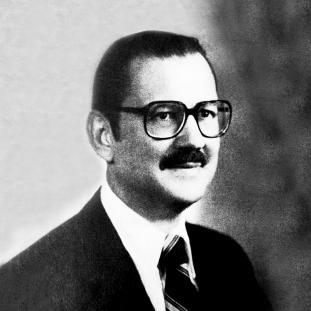 1939 and then continued his higher education at Yale University. Kuran received his architecture degree from this institution in 1952 and his master's degree in architecture in 1954. After returning to Turkey, he worked for a short time in the offices of Tuğrul Devres and Vedat Dalokay. Kuran then opened his own architectural office and brought to life projects such as Robert College Perkins Hall (Engineering Building), the Tropical Diseases Hospital near Yeşilköy Airport, the Özer Esen House in Erenköy, the Ögelman House in Tuzla and the Iran Cultural Center in Ankara. Kuran continued his academic career at the ODTÜ Faculty of Architecture in 1957 and turned to the history of architecture in the early 1960s. After serving as Dean of the Faculty of Architecture at METU between 1960-1968, he assumed the position of Turkish Vice President of Robert College High School in 1968. He made significant contributions to the development of Boğaziçi University, which started education in 1971, as the founding rector for 8 years. Kuran, who served as the head of the History Department from 1981 until his retirement in 1994, is a scientist who has made significant contributions to the history of architecture and education in Turkey with both his academic and administrative studies. Aptullah Kuran’s efforts to evaluate Ottoman architecture within the axis of Western and Mediterranean art history played an important role in Kuran’s recognition as an “international architectural historian.” He taught at various universities around the world throughout his academic life and served as a member of many boards and juries. Aptullah Kuran, who left his mark on the lives of many people who came into contact with him as an architect and architectural historian, educator and administrator, passed away after a heart attack in 2001.
What's included in the archive?
This archive, which developed throughout Aptullah Kuran's private, academic and administrative life, is divided into general headings as biography, academic, administrative and architectural history. Aptullah Kuran visited and photographed many architectural structures in Turkey and some recent years, drew or quoted the plans of some of the structures and kept notes in his own handwriting, and these were classified in a separate envelope for each structure in a total of six large drawers. The archive also contains lecture notes, book drafts, research slips, letters, official documents and personal documents. The archive contains files for a subject that has made the utmost encryption classification of the Quran archive and has kept the relevant daily documents together. The archive is still preserved in the classification he kept.