AZİZ OGAN ARCHİVE
Who is Aziz Ogan?
One of Turkey’s first archaeologists, Aziz Ogan (d. 1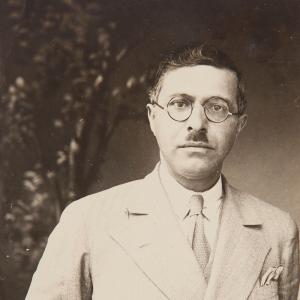 956), was born in Istanbul in 1888 as the son of Edremitli Hacı Halilzade Ahmed Bey. Ogan’s interest in archaeology dates back to his early years as a museum clerk through Osman Hamdi Bey, the founder of Ottoman museums, the director of the Istanbul Archaeological Museum at the time, and his father’s close friend. After graduating from the Sanayi-i Nefise Mektebi (School of Fine Arts) in 1910, Ogan worked as a commissioner in excavations in the provinces of Izmir, Manisa, and Aydın to develop his archaeological knowledge. Following his successes during this period, he was appointed to the Izmir Asar-ı Atika (Ancient Artifacts) Inspectorate in 1914. Ogan, who began his duty as the Asar-ı Atika Inspectorate in Izmir in 1918 following World War I, successfully continued in this position until 1931. He played an important role in the construction of the Izmir, Ephesus and Pergamon museums as well as the preservation of the antiquities there. Aziz Ogan, who was appointed as the General Director of the Istanbul Archaeological Museums in 1931, continued in this position until his retirement in 1954. Ogan, who introduced museum and archaeological studies in Turkey to the international context with the bulletin titled Istanbul Archaeological Museums Yearbook, which he published intermittently starting in 1934, also participated in the World Exhibition held in New York in 1939 as the head of the delegation for the Asar-ı Atika and museum exhibition in Turkey. The conversion of Hagia Sophia into a museum and the conversion of the Tabhane Madrasah in the Süleymaniye Complex into the Turkish and Islamic Arts Museum were also realized during Aziz Ogan’s term as General Director.
What's included in the archive?
Donated to Boğaziçi University by Aziz Ogan’s grandson Hüseyin İnan in 2003, this collection sheds light on the development of archaeology and museum studies in Turkey starting from the 1920s and allows us to trace the cultural policies of the early Republican period centered on pre-Islamic Anatolian civilizations. In addition to biographical documents such as decorations, awards, invitations, and greeting cards, the collection also includes Ogan’s correspondence with the Ministry of Education, the Turkish Historical Society, foreign museums, archaeological institutes, and archaeologists. The most important part of the collection is Ogan’s work during his time as İzmir Asar-ı Atika Director. Reports, guides, newspaper clippings on museums; excavation reports on Ephesus, Bergama, and Didim; articles on various Anatolian Monuments, and numerous photographs and glass negatives are among the valuable documents that make up the collection. The collection includes documents in Turkish, Ottoman, English, French, and German.
To access the collection:
https://digitalarchive.library.bogazici.edu.tr/handle/123456789/1