LEYLA ERBİL ARCHİVE
Who is Leyla Erbil?
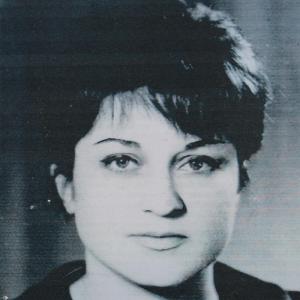 Turkish January 12, 1931 Leyla Erbil, one of the leading short story and novel writers of Turkish literature, was born in an old mansion in Fatih, Istanbul, Turkey. The middle child of three sisters, Erbil's childhood was spent first in Fatih and then in Beşiktaş. She started her education at Esma Sultan Elementary School and continued her education at Beyoğlu Girls' High School and Kadıköy Girls' High School. He started writing short stories and poems while studying in high school. During this period, he made friends with an artist circle including intellectuals such as Metin Eloğlu, Selahattin Hilav, Nevzat Özmeric Dec. in 1950, she entered the Department of English Literature at Istanbul University, and after her first year there, she had a short-lived marriage with Aytek Şay. from 1953 to 1955, she worked as a secretary at Scandinavian Airlines. Dec.1953-1955. It is at this time that he meets Sait Faik, of whom he is a big fan. They remained close friends until Sait Faik's sudden death in 1954.
She married Mehmet Erbil in 1954. When the couple moved to Ankara in 1955, Leyla Erbil Vüs'at O herself. Bener found himself among a group of artists and intellectuals such as Ilhan Berk, Mithat Fenman, Fethi Kopuz, Kaya-Ilhan Kopuz Dec. between 1956 and 1957, he worked as a translator and secretary at the Ankara State Hydraulic Works Dec. His first short story “Without Struggle" was also published in the magazine Selected Stories with the encouragement of his close friend Metin Eloğlu at this time. Later, he continued to publish his stories in magazines such as Ataç, Dost, Period, Papyrus, Turkish Language, Turkish Notebook, Yeditepe, Sail, Yeni a, Yeni Dergisi and Yeni Ufuklar.
In 1957, he and his wife moved to Izmir. in 1960, her daughter Fatoş was born. His first story book Hallaç was also published the same year. Erbil could not find the intellectual environment in Istanbul and Ankara in Izmir, and after the bankruptcy of his wife, they moved to Istanbul as a family and settled in Teşvikiye. in 1961, he joined the Workers' Party of Turkey and worked in the Art and Culture Bureau of the party under the administration of Fethi Naci, together with Edip Cansever and Ahmet Oktay.
In 1967, he worked at the Turkish Consulate in Zurich for a short time. His second book of short stories was published Overnight in 1968. he lost his father in 1969, the same year he left his job and started writing full-time. he was one of the founders of the Union of Artists of Turkey in 1970 and the Writers' Union of Turkey in 1974.
Her first novel, A Strange Woman, was published in 1971, and her short story book, The Old Lover, was published in 1977. in 1979, he was elected an honorary member of the University of Iowa in the USA. At the invitation of the Center for American Culture, he attended the International Writers' Workshop and gave a seminar on Turkish literature there.
In 1984, his mother, an Alzheimer's patient who had been hospitalized for a long time, passed away. His second novel, The Day of Darkness, was published in 1985. in 1986, he lost his close friend Tezer Özlü. His third novel, which he and Tezer Özlü designed together, was published in 1988 in memory of the letter Aşkları Özlü. Letters from Tezer Özlü to Leyla Erbil were published in 1995.
In 1998, his essays appeared under the title Mind Birds. in 2001, The Dwarf was published. throughout the 90s, he continued to be considered both with his literary production and his political stance. The statement he published in 1996 to draw attention to F-type prisons and hunger strikes received the signatures of about a hundred poets and writers. in 1999, he became the parliamentary candidate of the Freedom and Democracy Party (ÖDP) in the general elections and left the party's membership after the elections.
The PEN Writers Association of Turkey nominated Leyla Erbil for the Nobel Prize in Literature in 2002. PEN nominated Erbil for “his dominance of the Turkish language and literature, the special world he created by creating a unique language in his works and the universality of this world, as well as his contribution to art, but also with a responsible intellectual attitude towards the person on the street, life and the world”. Leyla Erbil is the first woman from Turkey to be nominated for the Nobel Prize.
The Three-Headed Dragon was published in 2005, the Remainder in 2011. he was awarded the PEN Short Story Award in 2013 on the following grounds: “We are proud to present the outstanding works in the field of literature to our master author Leyla Erbil for the PEN Short Story Award 2013 as an expression of gratitude for her struggle for a secular and democratic Turkey. We thank him for feeding his creativity with his enlightened responsibility and never-decreasing youthful enthusiasm until today.”
In the same year, his last novel, A Strange Man, was published. He died on July 19, 2013 in Istanbul. Leylim Leylim: Letters from Ahmet Arif to Leyla Erbil, containing his correspondence with Ahmet Arif, was published after his death. German English French Kurdish and Russian translations of his works have been published.
Since the 1950s, he has tried to expand the possibilities of literature and push the boundaries of language by using a new and experimental vocabulary against the traditional literary writing style and techniques, developing a unique punctuation mark system and changing the rules of syntax. In her works, in which she tried to create a new literary language and form, Erbil wrote about middle-class morality, individuation, male-female relations and the position of women in all this. In his works, in which he pushes the boundaries between fact and fiction, poetry and novels, the past and the present, Erbil dealt with the tense relationship of the individual's inner world and society.
What's in the collection?
The Leyla Erbil collection was donated to Boğaziçi University in 2016 by Fatoş Erbil, Leyla Erbil's daughter. In the collection it is possible to find about 40 notebooks Erbil wrote from 1940 until his death, correspondence Erbil made with friends, handwritten notes, personal documents, newspaper and magazine clippings, various published articles, posters-paintings, awards and some objects. This collection is an important resource for those who want to conduct research on the cultural and literary life of a period in Turkey.
The collection is physically located at the Nazim Hikmet Cultural Center.
Usage and access works are carried out by the Literature Department.